ANCIENT LETTER
Letter of Isias to Hephaistion
Isias to her brother Hephaistion [greeting].
If you are well and other things are going right, it would accord with the prayer which I make continually to the gods. I myself and the child and all the household are in good health and think of you always. When I received your letter from Horos, in which you announce that you are in katoche in the Serapeum at Memphis, for the news that you are well I straightway thanked the gods, but about your not coming home, when all the others who had been secluded there have come, I am ill-pleased, because after having piloted myself and your child through such bad times and been driven to every extremity owing to the price of wheat, I thought that now at least, with you at home, I should enjoy some respite, whereas you have not even thought of coming home nor given any regard to our circumstances, remembering how I was in want of everything while you were still here, not to mention this long lapse of time and these critical days, during which you have sent us nothing. As, moreover, Horos who delivered the letter has brought news of your having been released from detention, I am thoroughly ill-pleased. Notwithstanding, as your mother also is annoyed, for her sake as well as for mine please return to the city, if nothing more pressing holds you back. You will do me a favor by taking care of your bodily health. Farewell.
Year 2, Epeiph 30. (Address) To Hephaistion.
Read by Valdemir Mota de Menezes, the Scribe
terça-feira, 14 de janeiro de 2014

terça-feira, 7 de janeiro de 2014
AUGUSTALES
Augustales: were members of a religious and social institution common in the cities of the western Roman empire. The vast majority of Augustales were freedpersons. They attended to the veneration of the emperor and often acted as benefactors funding public entertainments and building-projects as well as paying entry fees. In return, they enjoyed the prestige of their office, which functioned almost as a magistracy. The institution thus provided wealthy freedpersons, who were legally barred from holding civic magistracies, with opportunities for public display and prestige. See also freedperson.

GOD OF MEDICINE
Asklepios (or Asclepius): was the god of medicine and healing in ancient Greek religion. The son of Apollo and Coronis, he was worshipped throughout the Greek world, but his most famous sanctuary was located in Epidaurus which is situated in the northeastern Peloponnese. Sanctuaries at Pergamon (in modern-day Turkey) and Kos were also renowned. The main attribute of Asklepios is a physician’s staff with an Asklepian snake wrapped around it. The cult of Asklepios became very popular during the 300s BCE and the cult centers (known as Askleieia, singular Asklepieion) were used by priests to cure the sick. The patient would spend the night at the sanctuary in a healing process known as incubation. During the night they would supposedly be visited by the god in a dream. Priests would interpret the dreams and then recommend a remedy or give advice on how they could be cured with perhaps a recommended visit to the baths and gymnasiums. Surgical implements and reliefs depicting surgical tools have been found associated with Asklepieia.

AELIA CAPITOLINA
By: Scribe Valdemir Mota de Menezes
Aelia Capitolina: is the name given to the Roman colony city of Jerusalem on the western hill in the area of the modern Jewish Quarter, built and named by the Roman emperor Hadrian. “Aelia” was derived from one of the emperor’s names; “Capitolina” recalled Jupiter, Juno, and Minerva, the deities of the Capitoline Triad in Rome, who became the patrons of Hadrian’s new city. He also erected a temple honoring Jupiter Capitolinus on the Temple Mount, and a temple to the Roman goddess Aphrodite on the present site of the Church of the Holy Sepulcher. Probably Hadrian’s rebuilding and renaming of Jerusalem sparked in part the Second Jewish revolt under Bar Kokhba (132-135 CE).
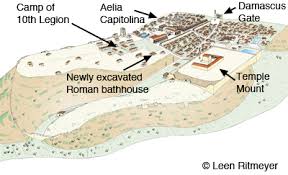
Aelia Capitolina: is the name given to the Roman colony city of Jerusalem on the western hill in the area of the modern Jewish Quarter, built and named by the Roman emperor Hadrian. “Aelia” was derived from one of the emperor’s names; “Capitolina” recalled Jupiter, Juno, and Minerva, the deities of the Capitoline Triad in Rome, who became the patrons of Hadrian’s new city. He also erected a temple honoring Jupiter Capitolinus on the Temple Mount, and a temple to the Roman goddess Aphrodite on the present site of the Church of the Holy Sepulcher. Probably Hadrian’s rebuilding and renaming of Jerusalem sparked in part the Second Jewish revolt under Bar Kokhba (132-135 CE).
ACHAIAN
By: Scribe Valdemir Mota de Menezes
Achaian (or Achaean): is a native or inhabitant of the later Greek province of Achaia (Achaea). Achaia is the northernmost region of the Peloponnese, a large peninsula and geographic region in southern Greece, which is separated from the northern part of the country by the Gulf of Corinth.
-------------------------------------------
Achaeans
From Wikipedia, the free encyclopedia
Achaeans are the inhabitants of Achaea in Greece. However, the meaning of Achaea changed during the course of Ancient history, and thus Achaeans may refer to:
- Achaeans (Homer), a name used by Homer in the Iliad for Mycenaean-era Greeks in general
- Achaeans (tribe), one of the major tribes of Greece according to the Hesiodic foundation myth
- Achaea (ancient region), historical inhabitants, during the Archaic and Classical periods, of the Peloponnesian region of Achaea
- Achaea Phthiotis, a central Greek region throughout the ancient Greek period
- Achaean League
- Achaea, the modern Greek administrative unit
terça-feira, 24 de dezembro de 2013
UN TRÉSOR JUIF DANS AFGHANISTAN
Ces documents découverts dans le premier siècle, il cite dans le livre du prophète Isaïe qui prouve l'ancienneté du Livre d'Isaïe. C'est l'une des nombreuses preuves de l'historicité de la Bible. (Scribe Valdemir Mota de Menezes)
Afghanistan : un trésor juif vieux d’un millénaire trouvé dans une grotte

C’est un véritable trésor spirituel que vient d’acquérir la Bibliothèque nationale d’Israël, située à Jérusalem. L’institution vient de racheter des manuscrits juifs vieux de plus de mille ans, trouvés dans une grotte près de la ville de Balkh, dans le nord de l’Afghanistan. Ils seront exposés pour la première fois au public dès la semaine prochaine.
Repérés par le Professeur Haggai Ben-Shammaï, le directeur académique de la Bibliothèque nationale, ces manuscrits, au nombre de vingt-neuf, ont été rachetés à des négociants européens, qui eux-mêmes les avaient rachetés à des négociants afghans.
Ils ont été trouvés en 2011 dans une guenizah, une cache temporaire, avant de les enterrer conformément à la loi juive. Ils sont encore très bien conservés.

Des analyses au Carbone 14 ont permis de les dater avec précision. Certains dateraient même du premier siècle de notre ère.
La plupart des textes ont été écrits en ancien persan ou en arabe et se composent de documents juridiques et commerciaux, selon le professeur. Les documents semblent avoir appartenu à un petit groupe de personnes.
Cependant, une découverte remarquable se distingue : il existe également quelques commentaires en judéo-arabe du Rav Saadia Gaon sur le livre d’Isaïe.
Ce trésor spirituel juif est une des plus importantes découvertes depuis celle de la Guenizah du Caire, à la fin du XIXe siècle, comprenant 200 000 manuscrits juifs datant de 870 à 1880, écrits en hébreu, arabe et araméen, et celle des manuscrits de la Mer Morte en 1947.
Déborah Partouche – © Monde Juif .info
sexta-feira, 6 de dezembro de 2013
SARCOPHAGE DE LA REINE SADDAN
L'archéologie est la science qui cherche à sauver les vestiges du passé. (Valdemir Mota de Menezes, le Scribe)
------------------------
Sarcophage de la reine Saddan
1er siècle apr. J.-C., calcaire
Département des Antiquités orientales, don F. de Saulcy
Il y a tout juste 150 ans, Félix de Saulcy (1807-1880), explorant le monument appelé Tombeau des Rois, situé au nord de la Porte de Damas à #Jérusalem, fit une découverte sensationnelle : un sarcophage en pierre inviolé, caché dans une chambre secrète. Une fois ouvert, le squelette qu’il contenait tomba en poussière. Hormis les fils d’or du vêtement, il ne restait bientôt plus de la reine Saddan que son nom gravé dans la pierre. Saulcy, à la recherche du tombeau des rois de Juda, décida qu’il s’agissait d’une princesse de la famille de David. Cette interprétation déclencha l’une des plus vives s polémiques archéologiques du XIXème siècle ; de nombreux savants, s’appuyant sut le texte de l’historien Flavius Joseph, identifiaient ce tombeau avec la sépulture d’Hélène d’Adiabène, souveraine d’un petit royaume du nord de l’Irak. Cette identification est généralement admise de nos jours. Saulcy ne voulut jamais reconnaître son erreur. Il parvint à faire acheter le site par les frères Pereire. Ces derniers l’offrirent en 1886 à la France qui en est toujours propriétaire.
De nouvelles fouilles ont été récemment menées sur le site pour parfaire la connaissance du monument. Actuellement des travaux sont réalisés afin d’en améliorer la mise en valeur. Un colloque, qui s’est tenu au Louvre en mars 2013, a permis de faire le point sur les nouvelles orientations de la recherche.
Assinar:
Postagens (Atom)